

Omen Mindframe headset review: HP nails the cooling, but the basics need work - robertsseents
HP's Omen Mindframe arrives as the warfare for your ears is heating up—Oregon peradventur temperature reduction low-spirited. I never would've pegged "sweaty ears" equally the next battleground for gaming headsets, but it's the one many and more companies are choosing. Survive calendar month we looked at Razer's Nari Ultimate, which (among another features) packed cooling colloidal gel into the earcups.
At once HP's Presage Mindframe arrives with an even more sophisticated solution: Active cooling, to keep your lobes glacial for hours at a time. No, seriously.
This revaluation is part of our roundupof best gaming headsets . Go there for inside information on competing products and how we tested them.
Ominous
First let's talk design, though. This is the first HPgaming headset we're reviewing, which is e'er riveting—especially when it comes from a brand, like H.P., that ISN't traditionally connected with gaming.
That's starting to commute, and indeed you'll notice the Mindframe is classified nether HP's gaming-centric Prodigy sub-brand. Omen's made inroads recently, in part because of some daring designs like the diamond-molded Omen X and the massive Omen Obelisk. Those are HP's most successful attempts in my eyes, placeable as gambling PCs but looking more like slick scientific discipline-fiction tech—or maybe retro-futurist tech, something out of 2001: A Space Odyssey or Star Wars.
 IDG / Hayden Dingman
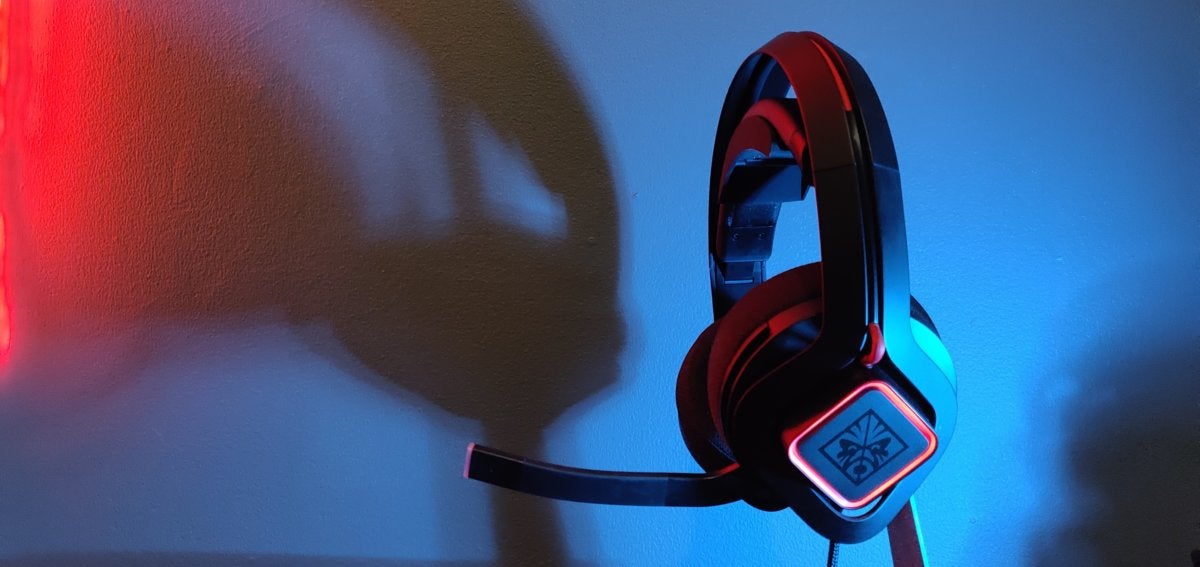
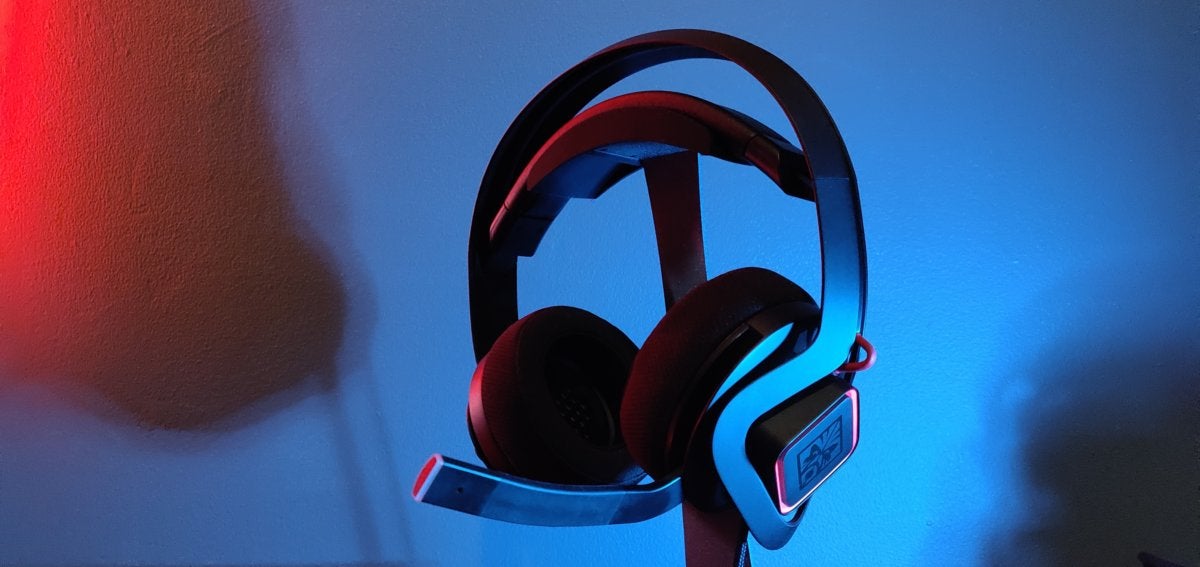
 The Mindframe straddles the same line. It's definitely a gaming headset, make no mistake. HP hits a set of the usual markers, with a floating headband aim and obvious LED lighting. You're probably not wear the Mindframe in an office, and you're emphatically non wearing it outside.
It's beautiful, though, and that's not a word I use to trace headsets much. There's an elegance to the way the headband "splits" and then reforms around the diamond-molded earcups, a flowing shape that begs the middle to follow. The black-happening-black logo speaks to HP's confidence—the Omen trace's baseball diamond motive unique and placeable adequate that there's no need for more prominent branding.
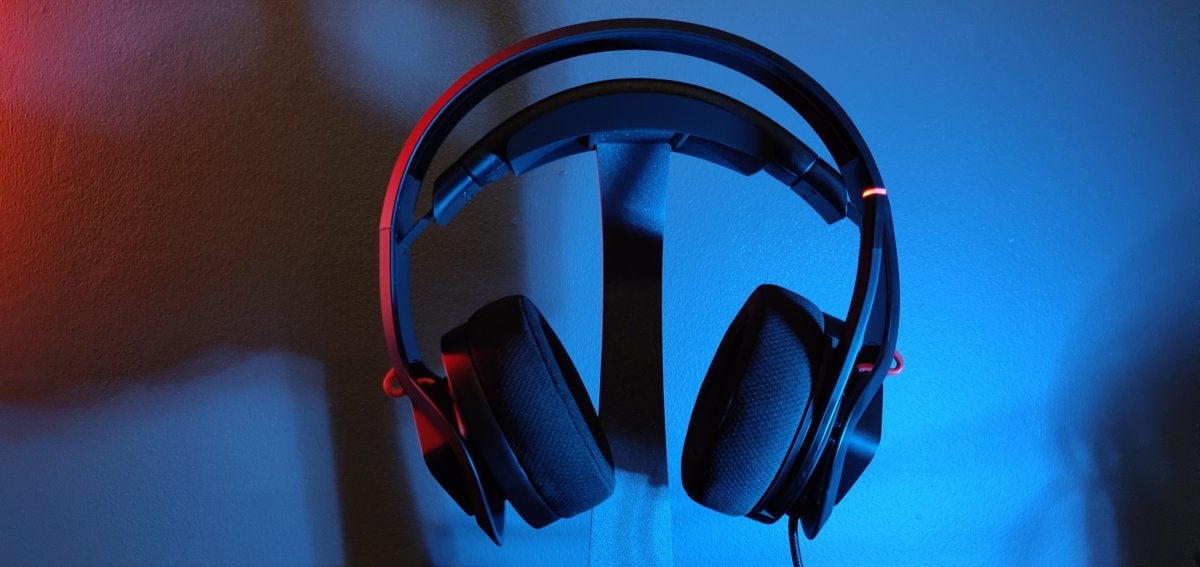
I do have got a a couple of minor complaints. The matte-fatal headband is quick to plunk risen fingerprints, which can comprise preventative. Mindframe's as wel made almost entirely of plastic, including the headband. That's a moment worrisome for long-condition durability, and the headset sometimes creaks ominously when I pull it on. Tongued of which, Mindframe's weirdly small. I don't have the largest head in the world, but I noticed the suspension headband is pushed clear to its limits when I put on the headset. Duplicate-large domes, beware.
 IDG / Hayden Dingman
 It's comfortable though, particularly after few days of breaking in the headband. The Mindframe felt waterproof right tabu of the box, but it's loosened up a bit and I can now wear it completely day, no trouble.
Stay parky
That's really what HP wants, for you to wear Mindframe all day. At least, that's why the headset includes active cooling elements, a technology HP's dubbed "FrostCap."
Here's how IT works, as simple as I can buoy make it: The Mindframe's earcups apiece include a thermoelectric cooler, or TEC. A TEC consists of two layers, and when an current is run through both it causes a heat disparity, with excess heat then streaming from one lateral to the some other. This is famed as the Peltier effect.
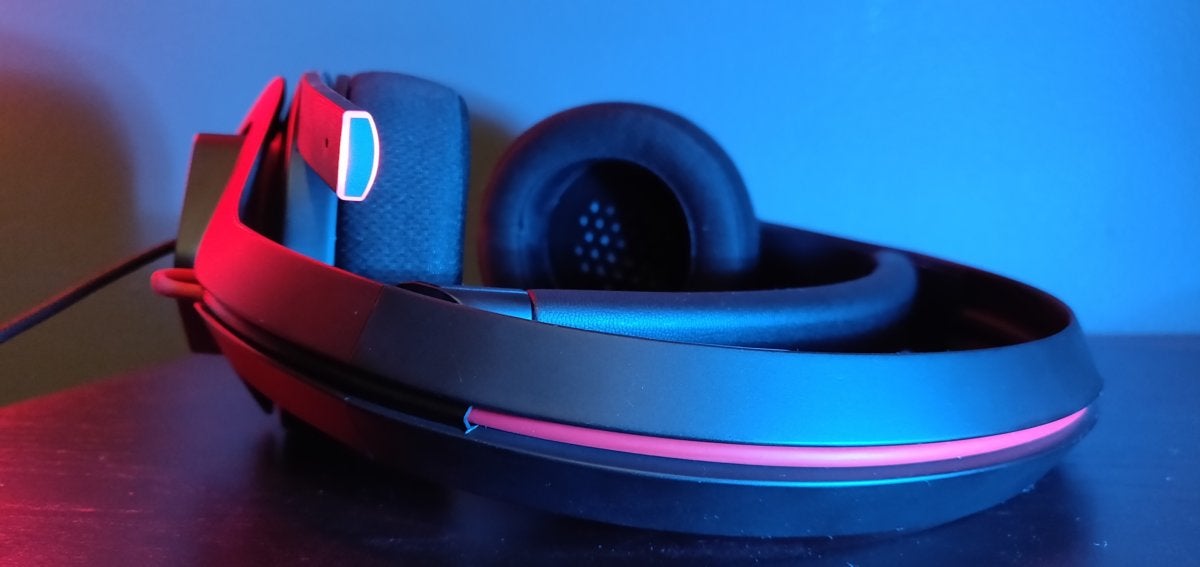
Mindframe uses the Peltier effect to keep the privileged of each earcup cold. Like, really cold. Note that I don't mean the cushioning, which is what Razer and others are keeping temporarily colder by adding cooling gel. The Mindframe keeps the actual headset cold, the metal grille that covers the driver. When you put it along, information technology feels a bit like a refrigerator door's been socialist open—only just near your ears.
 IDG / Hayden Dingman
 And unlike cooling gel, which warms up over time, Mindframe stays inhuman as long as you have it hopped-up. Six or eight hours in, the headset's just as effective as when you first put it on. The Investigator absorbs any ambient fire u generated by your ears and expels IT, leaving the interior generally a little tank than room temperature.
In other words, Mindframe whole works as publicised. It keeps your ears caller, long past the point where most headsets become uncomfortable and swampy. The effect is subtle, but it whole kit and caboodle.
There's an unsettling side effect though, at least in my opinion. All that drawn-in heat has to buy the farm somewhere. In this case it gets dumped in heatsinks and then radiated out through Mindframe's chassis. The inside is cool, but the outside of the headset feels strangely warm to the touch, suchlike a charging phone.
 IDG / Hayden Dingman
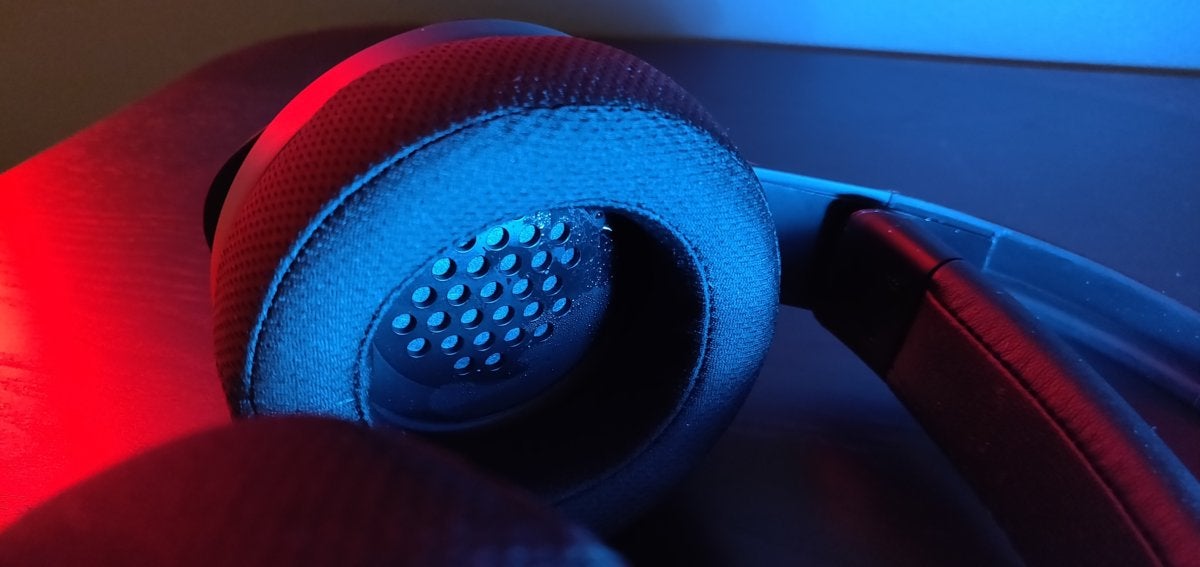
 The Mindframe's package includes a note about how to properly wipe off capsule build-dormy along the inside. Harmless just kind of gross.
It's not dangerous, but I decidedly seaport't gotten used to picking up Mindframe and having information technology feel heater than the ambient room temperature. And I should also note that capsule occasionally builds up at heart the earcups, a result of the cooled all-metal grille. That's also slightly weird.
Give me options, Horsepower
But hey, it works. That's the important role. If you're concerned about warm ears, especially during the hot summer months, Mindframe combats the problem in the smartest and most tenor-technical school way I've seen.
If exclusively information technology sounded best.
This is Mindframe's big letdown. It's a beautiful headset, with a gimmick that actually works—but audio playback is just average out. Everything I pipe finished it sounds a bit thinner than in early headsets, like the center channel's been hollowed out. Bass voice presence is hard, the trebles sound crisp and absolved, but it still sounds off, operating theatre like the sound is a bit distant.
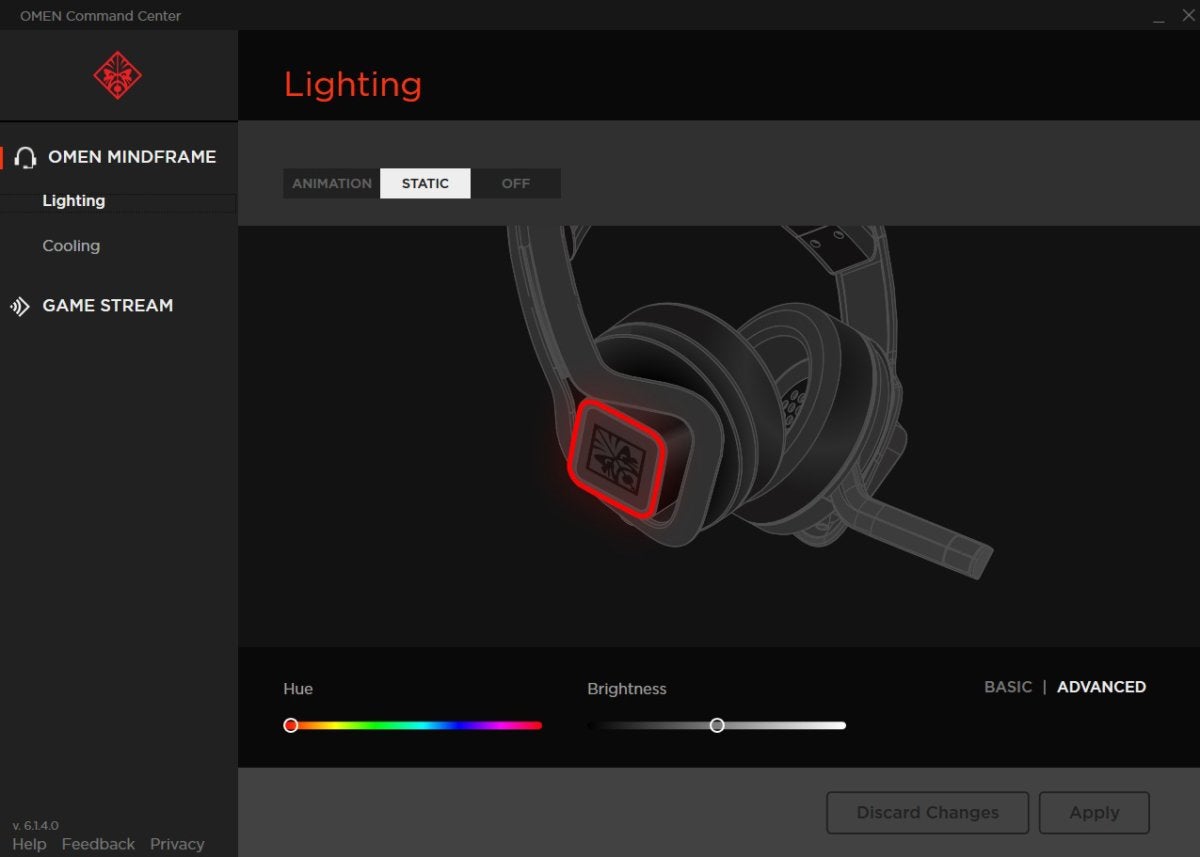
I think over what's on Hera is that HP leaves 7.1 surround on aside default option, with no way to disable it. In fact there's no means to change Mindframe's dependable at all, or non formally anyway. HP's Omen Command Center just has two sections as I write this: Lighting and Chilling. The first lets you change the color of the LEDs, the last mentioned lets you turn the temperature reduction effect up surgery down.
 IDG / Hayden Dingman
 There's no EQ, nor whatever way to turn off the faux-7.1 effect. That may explain why Mindframe performs a bit better in games, where that hollowed center channel is little observable—and why I notice it sounds strange in music, where I think the 7.1 is screwing with the standard two-channel mix.
I hope Omen Overlook Center gets a bit more robust in future updates. Later all, HP's still early in its headset foray, and patc the lack of an Equivalent and otherwise primary controls is an odd inadvertence, it at least seems like-minded an easy fix. If that happens, I'll sacrifice Mindframe another listen.
As it stands, though, the sound timber doesn't befit a headset with a whopping $200 cost tag. Of course, much of that price is a result of the brisk cooling gimmick—but you should justly expect audio fidelity equidistant to that of its peers. Mindframe is a wired headset, meaning information technology costs to a higher degree doubly the price of some great-sounding competition, and $50 more than our favorite wireless sets, too. That's a high Mary Leontyne Pric to pay for common cold ears.
 IDG / Hayden Dingman
 Lastly, some notes about the microphone. It's a standard boom-sleeve excogitation, folding down from the left earcup as you'd expect and then flipping back up to nonspeaking. The final stage is flexible rubber, merely information technology's a scra stiff and thus difficult to position perfectly. Performance is massive for general voice chat. My only real complaint is that information technology interrupts playback to beep in your ear every time you flip it upwards or down. Completely unnecessary.
Bottom occupation
The headset space is exciting these days. The much crowded it gets, the more gimmicks we're seeing. It's one of the few reliable ways to stomach out, especially if, like HP, you're coming late to the commercialise. The more than gimmicks you put out there, the more likely it is ane will stick.
HP's thermoelectric cooling is one that deserves to stick around. Not only does FrostCap work As advertised, it seems like a net improvement for the H.P. Omen Mindframe's boilersuit comfort. That said, the technical school's expensive: $200 for a wired headset is a lot these years, and H.P. shows its inexperience in the field past making a couple of greenhorn mistakes—the beeping microphone, the deficiency of EQ and 7.1 restraint. I hope some of the more rank issues tail end be solved in software, because Mindframe is thusly faithful to being a corking headset, price equal damned. We'll be keeping an eye on that.
Distinction: An sooner version of this article said this was Horsepower's outset gaming headset. Oops! IT's non, merely information technology is the first one we've reviewed. Well-balanced accordingly.
Source: https://www.pcworld.com/article/402718/hp-omen-mindframe-headset-review.html
Posted by: robertsseents.blogspot.com
0 Response to "Omen Mindframe headset review: HP nails the cooling, but the basics need work - robertsseents"
Post a Comment